The anterior cruciate ligament — or ACL — is a major tissue band that connects the thigh bone to the shin bone and is one of the most commonly injured ligaments in the knee. Athletes and non-athletes alike can suffer from ACL injuries, but it is more common for athletes and physically active individuals to experience such an injury. Activities like running and skiing, where the knees undergo rapid stop-and-go movements are particularly high risk.
While not all ACL injuries require surgery, they often do. After the surgery is completed, the patient will have to undergo physical therapy to restore range of motion, strength and mobility, as well as alleviate pain and swelling.
What does an ACL tear feel like and how is it diagnosed?
When you tear your ACL, it is common to feel and hear a popping or snapping sound and you will not be able to support your body weight on it. Swelling will generally begin immediately and you may feel as though your knee is “giving out” when walking or putting too much weight on it. An ACL tear is diagnosed much like other knee injuries. Your doctor will perform some hands-on testing and then likely have an MRI done to fully understand the state of your injury.

If you are experiencing any redness, swelling, or fever associated with your foot pain, you could be experiencing a potentially life-threatening infection and should seek medical attention immediately.
Physical Therapy for an ACL Tear
The very first step in post-op physical therapy for an ACL tear is to help the knee heal. During this early stage in your recovery, you will likely be in a brace and will certainly be using crutches. You will start by learning how to properly use the crutches as well as perform light exercises that are designed to restore range of motion and normal function of the quadriceps.
Generally, at some point during the second or third-week post-op, swelling should be stabilized and you will begin to shed the crutches. Hip exercises play a huge role here as you make your way from two, to one, to no crutches. During this time you will also practice quad and hamstring exercises that will make returning to normal walking a much smoother process.
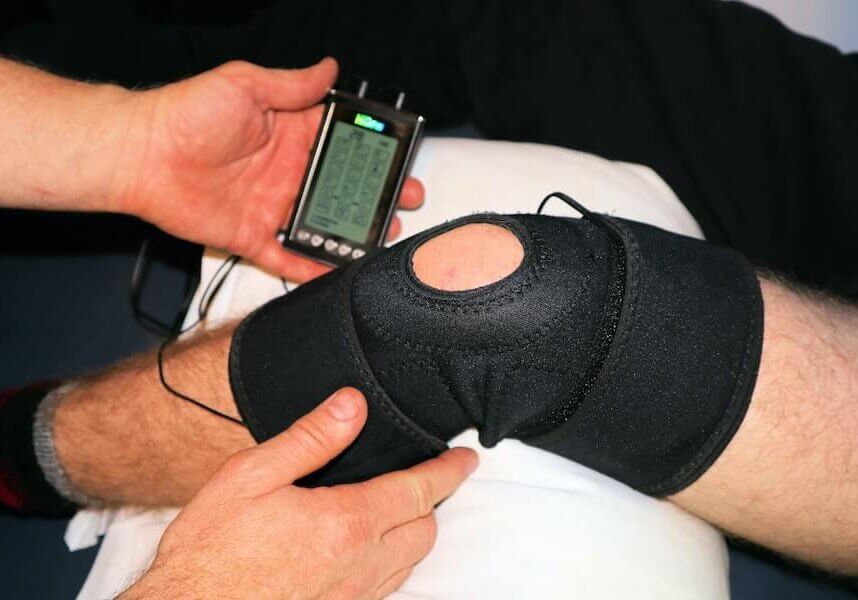
We often make use of Blood Flow Restriction Therapy (or BFRT) in treating ACL tears. BFRT works through the application of external pressure by means of an inflatable cuff to the muscle being trained. The cuff maintains a certain pressure as the patient performs specific low-resistance exercises, producing the benefits of high-intensity exercises. This treatment is typically used during exercise, but can also involve the use of compression devices alone.
After about four to six weeks post-op and beyond, the primary focus will be on restoring strength to the entire leg and getting you back to moving a bit more freely. Once you’ve passed roughly week 8, you may start feeling back to normal. At this point in your treatment, it is very important to remember to not overdo it on the intensity. Even though you may feel great, strenuous activity like sports can be catastrophic to your recovery — take it easy.
Your therapist may have you perform the single-leg hop test to assess your progression, and at this point if you have been given the green light, it’s back to normal. The length of your physical therapy program will vary greatly depending on your progress, your surgeon's specific protocol, how you perform on some of the above tests, and more. Your physical therapy team will do everything they can to assure you’re back to feeling your best and enjoying the activities you might’ve missed.
Best Physical Therapy in Reading, PA
Our physical therapy programs are based on outcomes. We listen to our patient's goals and figure out what we can do to meet them. At Wyomissing Physical Therapy, it’s not about scheduling your next appointment. It’s about maximizing your strength & minimizing pain.
We believe everyone deserves optimal care and individual attention. This is why we accept over 20 different insurance plans. We hold a Direct Access Physical Therapy certification from the Pennsylvania Physical Therapy Association, which allows us to offer care without a physician’s referral. By visiting Wyomissing Physical Therapy, you avoid the extra copay and time taken from your busy schedule. You guarantee yourself a comfortable visit, ample time with experienced healthcare professionals — and most importantly — the pain relief you’ve been searching for.
Schedule AN APPOINTMENT