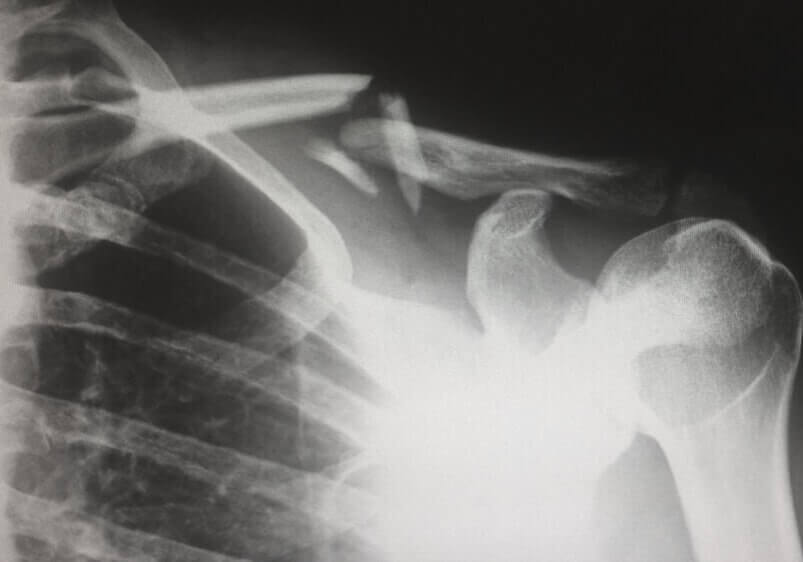
Total shoulder replacement surgery (arthroplasty) is a highly successful elective surgery that aims to relieve pain, as well as restore motion, strength, and function to the shoulder joint. After one year, 95% of patients report pain-free function of the shoulder and have minimal to no issues when returning to normal exercise and activity.
Even though shoulder arthroplasty has such a high success rate, not all patients reporting shoulder pain need to undergo the procedure. Before surgery, it is advised to implement more conservative treatments that are not as invasive as surgery. Many individuals who experience shoulder pain have found successful, long-lasting relief by practicing physical therapy and using corticosteroid injections.
What is Shoulder Replacement Surgery?
The shoulder is what is referred to as a “ball and socket” joint, much like the hip. The upper arm bone (humerus) has a rounded top end called the humeral head, where it joins with the socket-like structure (glenoid cavity) of the shoulder blade. The joint is held together by various ligaments, with cartilage in between points of friction to produce a smooth-moving shoulder.
Shoulder replacement surgery, or shoulder arthroplasty, is an elective procedure in which damaged portions of the shoulder are removed and subsequently replaced with artificial components. In almost every case of total shoulder arthroplasty, the humeral head is replaced with a metal ball, and the glenoid cavity is replaced with a smooth plastic cup. This choice of materials has proved to be incredibly effective.
There are two main type of shoulder replacements:
Anatomic/Primary Shoulder Replacement: this procedure replaces the damaged shoulder as well as the ball and socket in the normal, anatomic fashion. With an anatomic replacement, the patient's rotator cuff is intact or adequate in managing and moving the replaced joint.
A Reverse Shoulder Replacement: is a surgery designed to replace the arthritic shoulder joint as well. However, the choice of this surgery is made when the patient's rotator cuff is torn beyond repair. In a Reverse Shoulder Replacement, the ball and socket mechanism are simply "reversed", meaning the ball of the joint is placed where the socket was and the socket where the ball is placed naturally. Because of this arrangement, the rotator cuff is not needed to help lift the arm. This surgery has become an incredibly satisfying and functional way for someone to regain most of their mobility in a joint that was previously severely limited or painful. A reverse shoulder replacement has also become recommended for someone who has experienced a massive rotator cuff tear in the absence of shoulder arthritis, that cannot be repaired.
Causes of Needing a Shoulder Replacement
Just like other types of arthroplasty such as hip or knee replacement, the absolute most common cause of needing your shoulder replaced is arthritis, specifically osteoarthritis. As time progresses, the tissue damaged by arthritis steadily gets worse — often to the point of needing shoulder replacement surgery.
Other causes include, but are not limited to:
- Torn rotator cuff
- Broken bones and shoulder fractures
- Avascular necrosis
- Ankylosing spondylitis
We see numerous patents recovering from a shoulder replacement from the following establishments:
Physical Therapy for a Shoulder Replacement
Before Your Shoulder Replacement Surgery
If possible, it is highly recommended to work with a physical therapist before you have surgery. In an ideal circumstance, your shoulder will be in the best possible condition it can be prior to surgery. By performing preoperative physical therapy, you increase the chance of having a smooth recovery.
Our Physical Therapist in Reading PA, Joe Miller, will create an individually tailored program to make sure that your shoulder is as prepared for surgery as it can be.
Pre-Op Physical Therapy Goals:
- Increase strength to support your new implant
- Regain mobility
- Soothe pain
- Reduce recovery time
After Your Shoulder Replacement Surgery
After your surgery is completed, you will likely have a short day at the hospital, around two to three days depending. During this time your physical therapist will teach you the safest and easiest ways to perform simple daily tasks like getting out of bed, how to get dressed without harming your shoulder, and how to use your sling properly.
Once you are out of the hospital, Wyomissing physical therapist, Joe Miller, will begin to work with you on more complex exercises and techniques to get your shoulder in the best condition possible.
Post-Op Physical Therapy Goals
- Strengthen the muscles around the shoulder to provide support
- Regain functional mobility so that you are no longer restricted in performing daily tasks
- Task-focused training so that you may return to the specific movements of your job or sport
- Ensure you have the smoothest recovery possible
If you are experiencing any redness, swelling, or fever associated with your shoulder pain, you could be experiencing a potentially life-threatening infection and should seek medical attention immediately.
Best Physical Therapist In Berks County
Our doctor at Wyomissing Physical Therapy, Joe Miller has spent the last 30 years successfully transforming patient outcomes in the Reading and Berks area. He will pay attention to your individual concerns and needs to provide you with care that is not only highly effective, but comfortable and considerate. If you are experiencing pain, there is no need to accept it — visit our office and start feeling relief.
Schedule AN APPOINTMENT